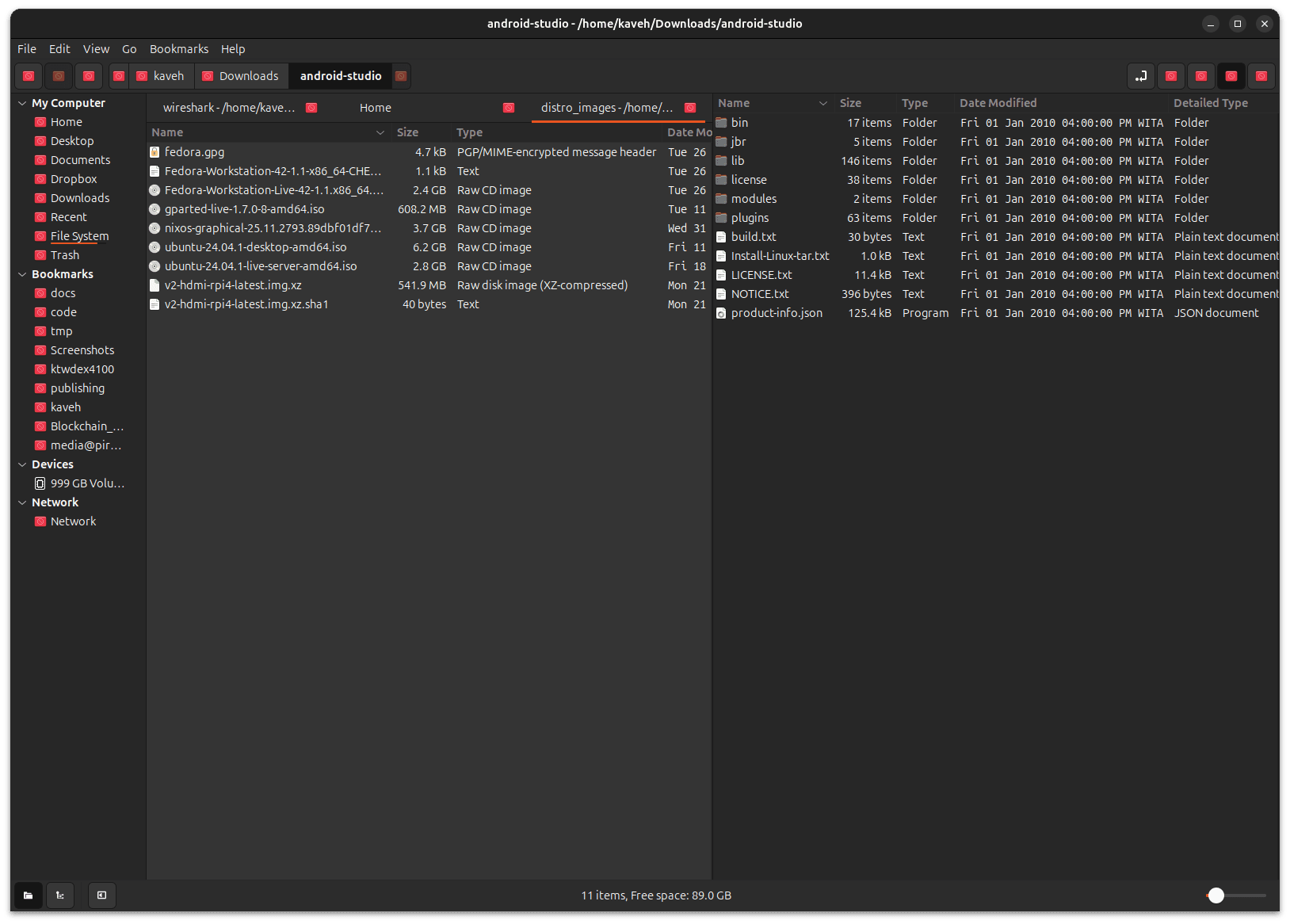
I think it is to safe persistent tabs (e.g. session restore) is an essential feature of any web browser. Most people likely would have a hard time managing without one.
I have been puzzled by the scarcity of file managers with persistent tabs in the Linux ecosystem. Nautilus, the default file manager in GNOME, is likely the one most people new to Linux experience given the popularity of Ubuntu and Fedora. Nautilus has had a feature request for 17 years (!) and still no support for persistent tabs.
The only viable file manager I have found with session restore has been Dolphin, but installing it would pull in a crapload of dependencies and basically the entire KDE core which makes it janky on Ubuntu (my main driver) and doesn't quite look like it belongs.
Last year I decided that complaining won't get me anywhere and went on a thorough hunt for how to make it happen. First I thought maybe I make my own file explorer, but decided against it when I discovered Nemo from Cinnamon. I figured this would be the perfect file manager had it had persistent tabs.
I went through two of the previous issues (2832 and 3240 with the same feature request and saw the maintainers had concluded this is a non-core feature and not worth implementation due to resource constraints.
I honestly don't know how people live without persistent tabs in file managers, so I disagree with that being a non-core feature. I took a quick look at nemo's code on github and found it pleasantly easy to follow. C is the first programming language I ever learned, and even though it's no longer in my daily tools, I can still hold my ground. With some help from Claude Code to navigate the code base, I implemented the tabs in my fork and within a weekend I had my own custom file manager with tabs!
After a couple weeks of working out small issues that popped up, I submitted a PR) and after four months, viola! Now nemo has tabs, and I have my well-deserved tabs in my favorite file manager!
All of this was possible because of the power of open-source software, and a robust ecosystem that encourage contributions and productive discourse. After all, open-source software is the sum of all our contributions.